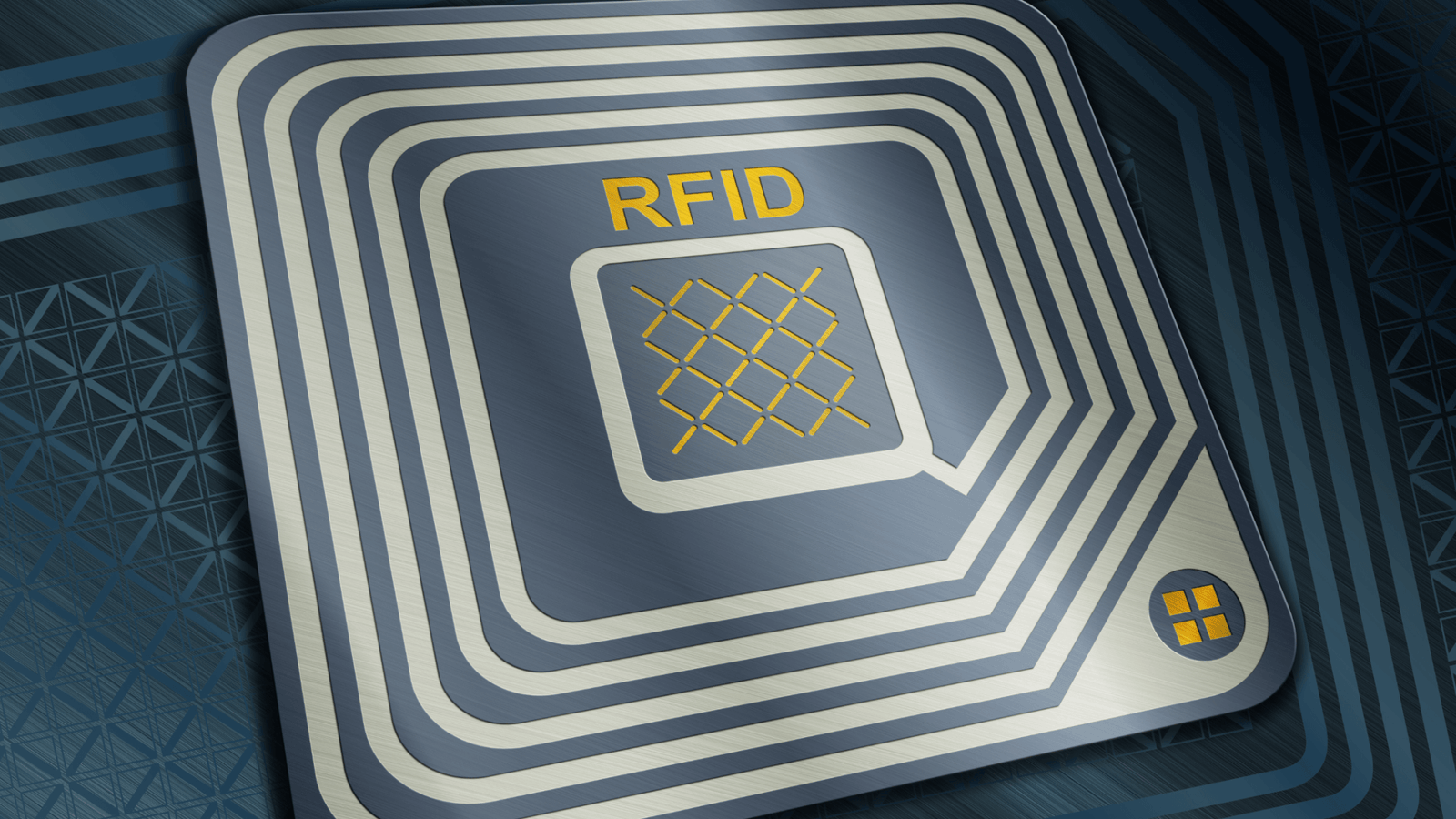
RFID stands for “radio-frequency identification” and refers to a technology that uses radio waves to capture digital data encoded in RFID tags or smart labels (described below). RFID is comparable to barcoding in the sense that data from a tag or label is taken by a device and stored in a database. RFID, on the other hand, has several advantages over systems that use barcode asset tracking software.
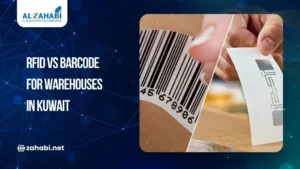
The most apparent difference is that RFID tag data may be read from a distance, whereas barcodes must be aligned with an optical scanner.
How does RFID work?
RFID is one of a category of technologies known as Automatic Identification and Data Capture (AIDC). With little or no human intervention, AIDC methods automatically recognize items, collect data about them, and enter that data straight into computer systems. RFID systems accomplish this by utilizing radio waves.
RFID systems are made up of three parts: an RFID tag or smart label, an RFID reader, and an antenna. RFID tags have an integrated circuit and an antenna that transfer data to an RFID reader (also called an interrogator).
The radio waves are then converted by the reader into a more usable kind of data. The data acquired from the tags are subsequently transmitted to a host computer system via a communications interface.
What is RFID Traceability?
Traceability refers to the ability to track an asset and all of the processes it goes through, from raw material procurement to production and consumption.
In other words, traceability allows us to know “when and where a product was made, what stages or locations it passed through in the distribution chain, and eventually who consumed it” at all times.
Why RFID Traceability?
Traceability has become increasingly important among manufacturers in recent years as a result of improved product quality and increased safety awareness, and it has been incorporated into almost every field we can imagine, most notably the automotive, electronics, food, and pharmaceutical industries.
If a quality issue arises, the manufacturer must be able to respond quickly and effectively. A slow or inadequate reaction from the manufacturer could foster distrust among customers or business partners, thereby jeopardizing the company’s survival.
Furthermore, as consumer protection regulations have been adopted, the number of enterprises that must be able to promptly withdraw their products due to difficulties has grown year after year.
Types of Traceability
In the Production Chain:
Traceability in the manufacturing chain enables us to track and regulate products from the time raw materials and parts are acquired, through assembly or production, and finally distribution or sale. Manufacturers may have a record or history of a certain item, whereas buyers and consumers may be aware of the origins of the things they hold in their hands.
This enables producers to produce with higher precision and to recall a specific product line when problems or faults are discovered.
Internal Traceability
Internal traceability refers to the control of the movement of parts/products within a certain constrained area of a supply chain, such as a corporation or manufacturing plant.
Internal traceability can also be defined as the management and usage of the manufacturing history and the outcomes of the plant’s inspection of these parts.


Add comment